
 SCMC Publications - Accounts
This unique site on the Shropshire/Wales border has been worked intermittently from at least Roman times up to the last century. Known locally as the Ogof (the welsh name for cave), the site has often been mistaken in the past for a cave, but it is in fact a very early mine working.
The site is near to Offa's Dyke (an early defensive earth work) and two iron age hill forts. Copper was worked in the early years, but when these deposits were exhausted, zinc and lead were mined.
A4 with card covers, 63 pages, plus black & white pictures, illustrations and plans.
Situated in the South of Shropshire in the middle of the metal mining area, Snailbeach was by far the largest metal mine in Shropshire. At one time it was considered "the richest mine per acre of ground in Europe". This fact, taken together with the extensive collection of surface remains has made the site very popular with mining historians.
Sadly, underground exploration has been particularly difficult since the mine closed in 1911, and it is only in recent years that considerable progress has been made in reaching the upper parts of the 'main' stopes and workings.
Plans to fill the underground workings have been strongly opposed by the Club, while some of the near surface, unstable sections have been lost, the deeper more interesting areas have been saved - largely due to the discovery of rare bats!
A4 with card covers, 60 pages, plus black & white illustrations and plans.
For many years the presence of old limestone mines and quarries, on the East side of Shropshire, around the Village of Lilleshall was virtually unknown. Flooded, overgrown, infilled and abandoned, few passers-by appreciated the important role these holes played in the Industrial Revolution in Shropshire - providing considerable amounts of limestone for the blast furnaces of Coalbrookdale and surrounding areas.
Extensive research by Club Members since the late 1950's, with a full scale survey in the 1960's, coupled with improved geological information (from bore holes sunk in the 1980's and 90's) has effectively brought the mines back, from being mere folk memories to being fact.
A4 with card covers, 65 pages, plus black & white illustrations and plans.
The surface remains at Snailbeach are considered to provide the most complete lead mining complex of the period 1850-1900 that can be found anywhere in Europe. The value of the site lies not in the individual buildings, but in the total setting.
No fewer than 11 of its surviving structures have been listed as worthy of retention. The unique range of buildings include: engine houses of wood, stone and brick for beam, horizontal and vertical steam engines, along with adits, flues, dressing floors, shafts, workshops, railways, a magazine and a reservoir.
A4 with card covers, 27 pages, plus black & white illustrations and plans.
First published as the "Engine Houses of the Mines of South Shropshire" (in 1969), it was the first attempt to systematically survey the surface remains of the metal mines in South Shropshire. Terry Davies' original surveys have been reproduced and complemented by Malcom Newton's superb sketches of the buildings, allowing the reader to quickly grasp what the structure was like, forming a unique study of the local metal mining industry.
A4 with card covers, 83 pages, plus numerous black & white illustrations, drawings and plans.
This account was originally produced for the Underground Video Workshop held during the 1992 National Association of Mining History Organisations (NAMHO) field meet, hosted by the SCMC. The increasing use of video equipment underground has given rise to the need for information on how to choose video equipment for subterranean use, the protection of fragile kit, some examples of useful procedures and techniques and some special problems of lighting and sound below ground.
The final topic is a summary of some general video production ideas, and how they can be applied underground.
A4 with card covers, 47 pages, plus numerous black & white diagrams.
The Club has been actively surveying and recording the remains of the mining industry of Shropshire and surrounding Counties for over 30 years. During that time, many surface buildings have either fallen down, disappeared completely or have become obscured by trees and undergrowth.
In 1993, the Club began a comprehensive survey of the remaining surface features and accessible underground workings. When complete, the information will be published in several volumes to make a comprehensive record of the area. This Gazeteer is the first volume and it is hoped that it will be followed by several more, each one concentrating on the surface features and underground workings of different areas of Shropshire.
A4 with card covers, 29 pages, plus black & white maps.
The Shelve Mining Region is a predominantly sedimentary succession, with some interbedded pyroclastics and intrusives, which are Precambrian to Early Silurian in age. The area underwent folding and faulting during the Taconian Orogeny and has also probably been relocated from the original depositional area along the Pontesford Linley fault system.
The area was extensively mined for barytes, lead and zinc in the 19th century. The distribution of these minerals was the result of the complex geological structure and seven phases of incursion by mineral rich fluids.
A4 with card covers, 54 pages, plus diagrams and fold-out plans.
The site information in this publication includes a description of surface remains and underground workings were accessible.
The account is an update of earlier Club Accounts (No.2, 4 and 12), but with an extended area of coverage.
A5, card covers, 61 pages, with black & white maps.
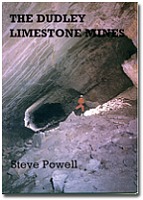 Produced jointly with the Peak District Mines Historical Society
Almost all traces of the mines around Dudley (now part of the West Midlands conurbation) have "disappeared", this publication is intended to provide a background history to the limestone mines of Dudley, an insight into their operations and a guide to those features that still survived at the time of writing.
A4, card covers, 68 pages, with numerous black & white photographs, illustrations and diagrams.
 An account of the formation of the Shropshire Caving & Mining Club and some of the activities and events that happened during it's first 10 years of existance.
Written by David Adams the founder of the club, it is illustrated with 84 black & white pictures from the Club's early years.
A4, card covers, 49 pages.

In-print copies of Club Accounts and Journals can be ordered online from:


