
 SCMC News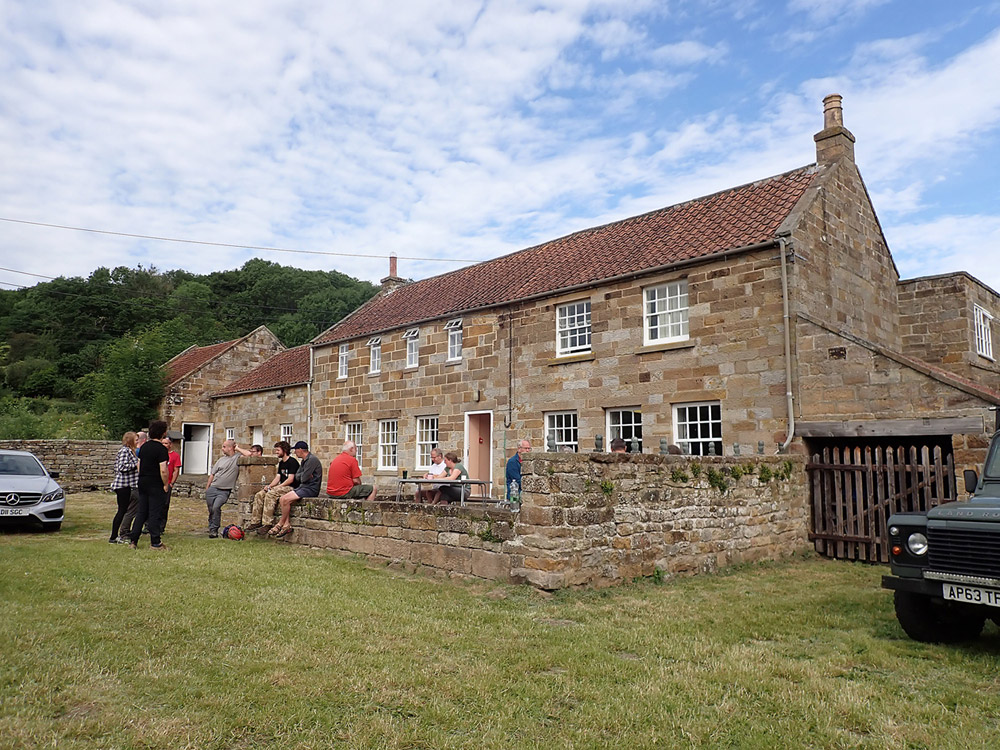
NAMHO delegates outside the Holme House bunkhouse, Grosmont. (Vicky Robinson)
The National Association of Mining History Organisations 2022 conference was held in North Yorkshire between 17th and 20th June. Hosted by the Cleveland Mining Heritage Society (CMHS) at Grosmont, a small village not far from Whitby. Over 20 Club members made the journey to the conference, staying in surrounding campsites, B&B’s and cottages. Quite a few stayed in a nearby bunkhouse and campsite a short walk beside the North York Moors Railway line (and the engine sheds housing their steam locomotives) from St. Matthew’s Church which was the venue for the lectures and Friday and Saturday social events.
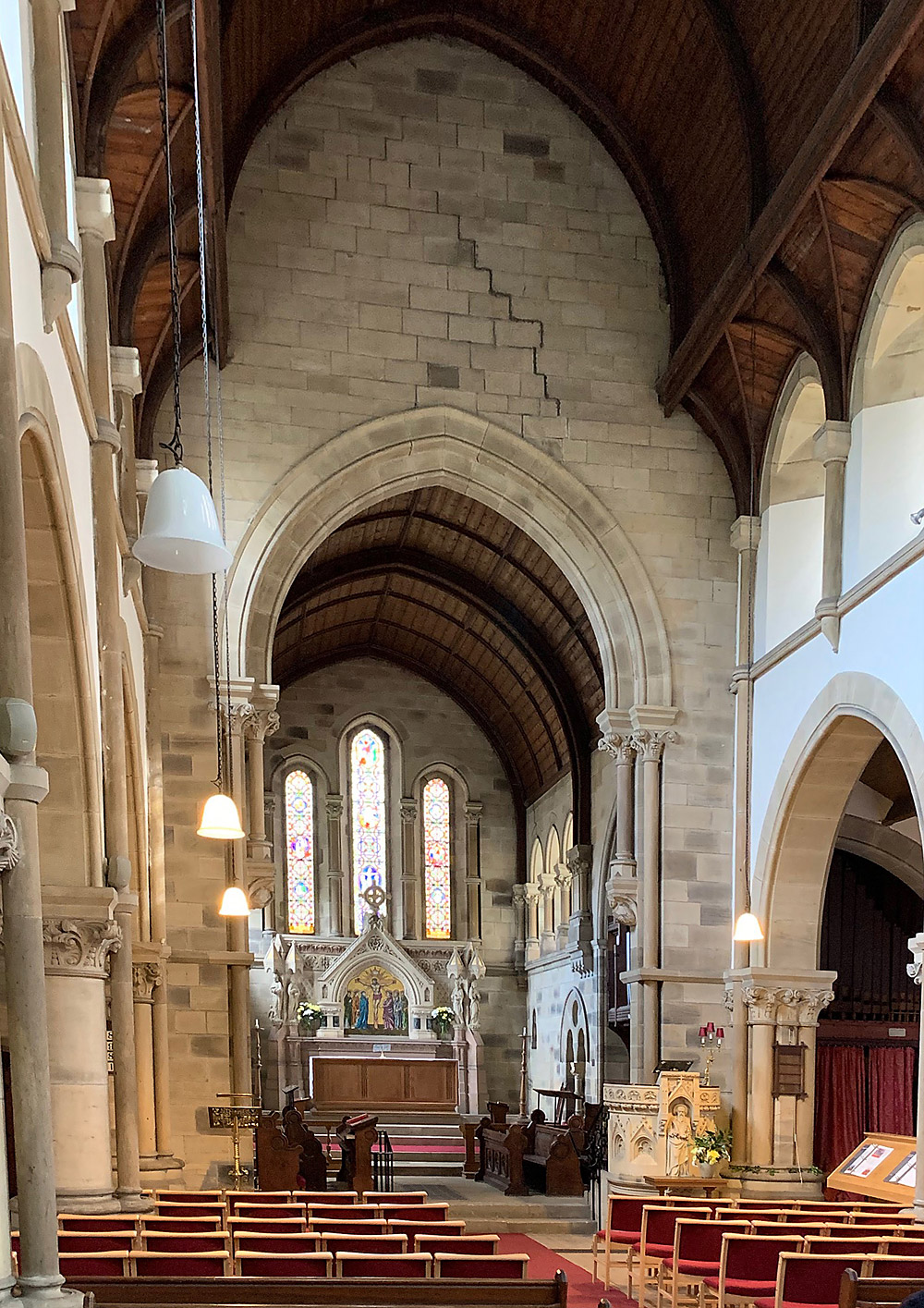
The Nave of St. Matthew’s church, Grosmont. (Gareth Rushton)
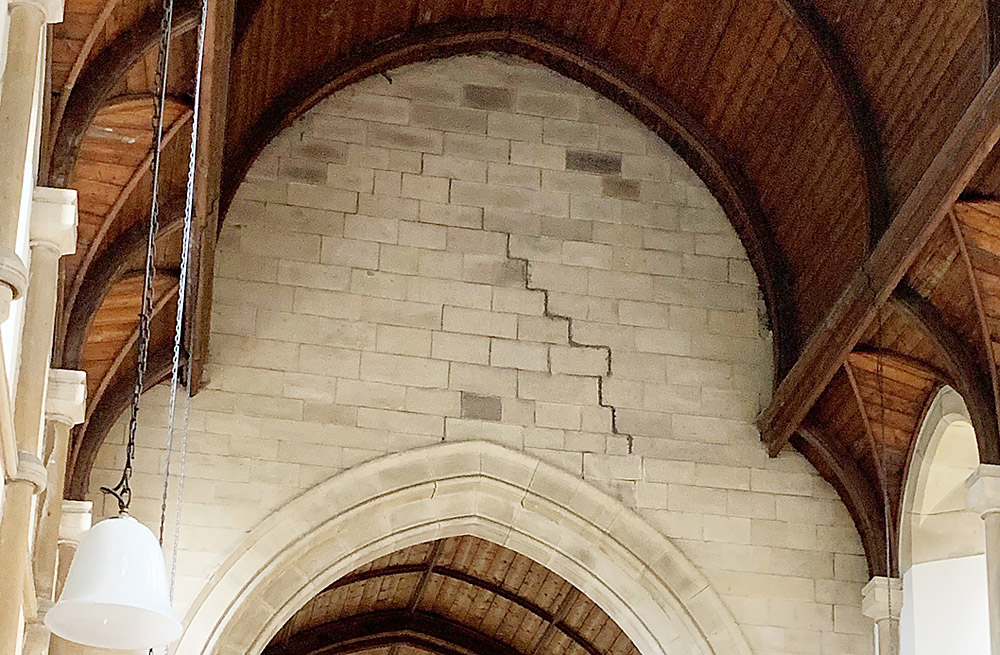
The large crack in the Nave, with the interesting timber roof. (Gareth Rushton)
The theme for the lectures was ‘Industrial Minerals’, with an emphasis on Cleveland. A very broad subject it seems, covering iron, steel, whinstone, jet, salt and alum, not forgetting fossils! At Grosmont shallow ironstone workings run under the railway and church - the latter has suffered from mining subsidence with a large crack in stonework of the nave.
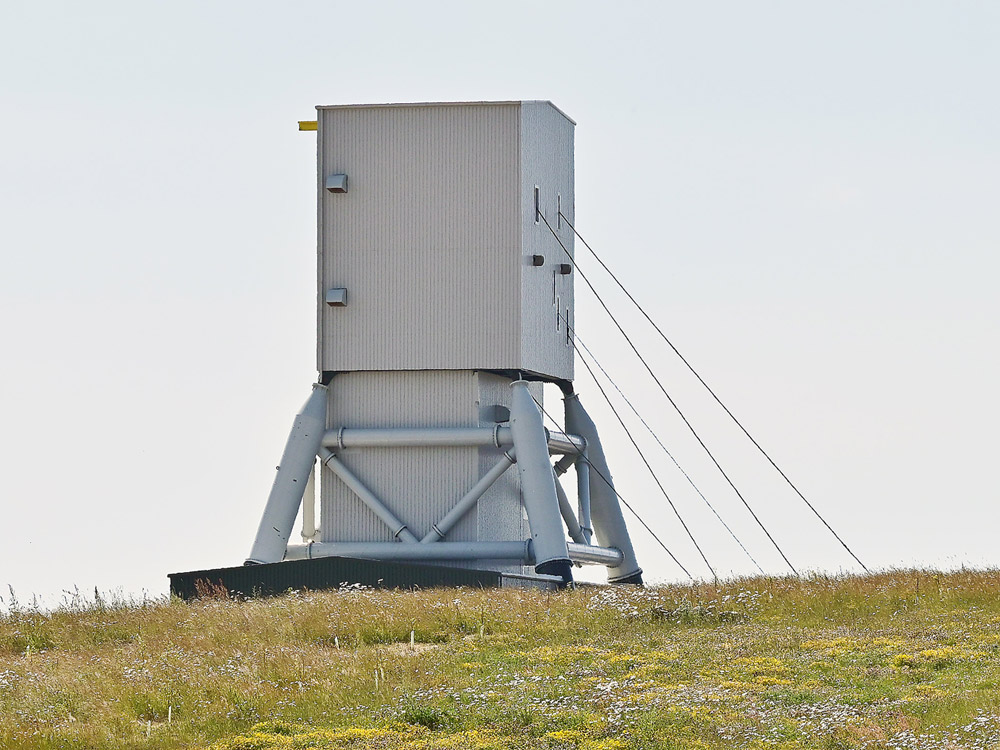
The temporary headframe at Woodsmith mine. (Kelvin Lake)
Mining is still taking place locally, potash at Boulby (a mine the Club has visited on several occasions in the past) and potash and polyhalite at Woodsmith mine which is under active development. This mine has a temporary ‘visible’ headframe at Sneatonthorpe south of Whitby and intermediate shafts on the 37km long mineral transport tunnel at Lady Cross Plantation and Lockwood Beck. As the mine is in the National Park, to minimise it’s impact the plan is to take all minerals via the tunnel to the materials handling facility at Wilton, Teesside. Neil Rowley (a retired Boulby mine employee) and Peter Woods (one of two geologists after which Woodsmith mine is named) gave an interesting talk on these fertiliser mines. On the Sunday, Club member Rob Vernon’s talk covered how phosphates have been used as a fertiliser for centuries.
Throughout the weekend there were a number of geological and history walks covering local industrial archaeology ranging from the sites of alum works, blast furnaces, the railway and ironstone workings at Rosedale, the fan house at Grinkle mine and the Cleveland Ironstone Mining Museum (currently closed to the public and undergoing renovations) to name just a few.
Four underground sites had been lined up for multiple visits over the weekend giving everyone a chance to visit them.
A very enjoyable conference, congratulations to Cleveland Mining Heritage Society on their first and very successful NAMHO Conference.
Neal Rushton, Chair, Shropshire Caving & Mining Club

